 Back to Blog
 LAU and Forward MENA Join Forces to Empower the Next Generation of Talent
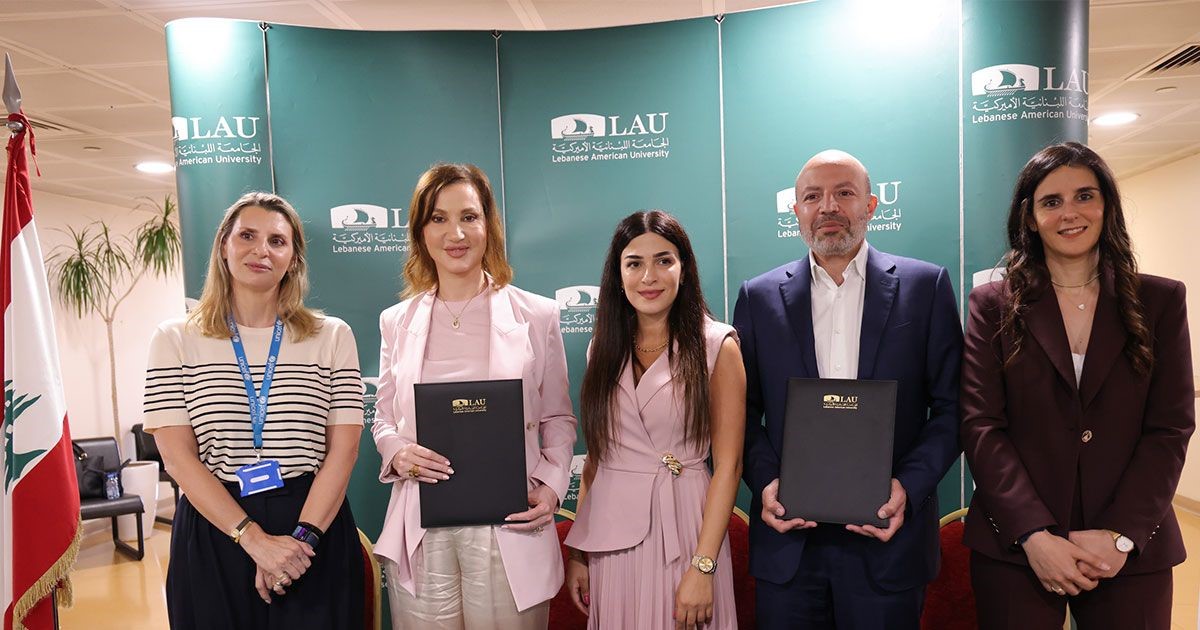
The Lebanese American University’s Adnan Kassar School of Business (AKSOB) and Forward Digital MENA officially signed a Memorandum of Understanding (MoU) on June 3, 2026, marking the beginning of a strategic collaboration focused on equipping students with internationally recognized digital and professional skills through the nammiskills platform, a unique one-stop online destination that aims to equip youth with in-demand digital, technical, and soft skills while fostering a culture of learning-to-learn and continuous growth, developed by UNICEF and the World Bank and implemented by Forward MENA with the funding from the Government of the Netherlands.
Held at LAU Beirut campus, the signing ceremony was accompanied by a panel discussion that brought together leaders from academia and the private sector to discuss the future of employability, continuous learning, and the growing importance of micro-credentials in today’s rapidly evolving job market.
Bridging the Gap Between Education and Employment
During the discussion, Mouhamad Rabah, President of Forward Digital MENA, highlighted one of the most pressing challenges facing Lebanon today: the disconnect between university education and market needs.
“We were hearing about big unemployment rates in Lebanon, yet at the same time we were seeing great opportunities in the private sector looking for skills that are missing from youth graduating from universities.”, Mouhamad Rabah, CEO Beirut Digital District.
He emphasized that the future of education lies in “re-skilling, up-skilling, and continuous learning,” especially in an era increasingly shaped by artificial intelligence and rapidly shifting job requirements.
He described nammiskills as a platform specifically built to bridge this gap by connecting learners to industry-relevant opportunities and certifications.
UNICEF Chief of Adolescent and Youth Programme Amal Obeid highlighted another challenge facing education systems today: Ensuring that young people begin developing career-ready skills long before they enter the workforce.
Drawing on UNICEF’s work with youth across Lebanon, she pointed to the gap that often exists between traditional education and the skills increasingly demanded by employers, particularly in innovation, entrepreneurship, and digital literacy.
“If we wait until young people graduate to prepare them for the future of work, we have already waited too long,” she said. “These skills must be cultivated throughout the educational journey, giving young people the confidence and capabilities to adapt, innovate, and contribute in a rapidly changing world.”
Expanding Access to Industry-Recognized Credentials
Through the agreement, LAU students and alumni will gain access to a wide range of digital skills programs and certifications offered by leading technology providers such as AWS, Microsoft, and LinkedIn Learning.
The collaboration aims to:
• Equip students with practical, market-aligned digital skills
• Strengthen university-industry collaboration
• Enhance employability and career readiness
• Provide students with industry-recognized certifications and learning pathways
Forward MENA will also conduct onboarding sessions, recommend learning pathways based on labor market demand, and ensure that at least 100 students annually complete a course across LAU’s Beirut and Byblos campuses.
The Growing Importance of Micro-Credentials
A central theme throughout the panel discussion was the increasing value of micro-credentials in shaping future careers.
Rabah noted that certifications issued by major technology companies are becoming “a passport” to new opportunities:
“Micro-credentials are becoming as important, if not more important, than traditional degrees because they are issued by leading technology companies that give you a visa to great potential job opportunities.”
He further stressed that the platform’s primary success metric is not enrollment numbers, but real economic impact:
“Our KPI is helping youth improve their earnings, and that’s the most important KPI.”
A Shared Commitment to Student Success
The event also reflected AKSOB’s commitment to integrating practical, future-focused learning into the student experience.
During the discussion, the Dean of AKSOB emphasized the importance of encouraging students to actively pursue micro-credentials and lifelong learning opportunities:
“I’m also going to make it mandatory and impose it on certain courses and have them be part of the learning experience, because we care more about you than you care about your future and your career.”
The statement underscored the school’s belief that universities must evolve beyond traditional academic models and become active partners in preparing students for the future workforce.
Building Through Collaboration
Rabah concluded by highlighting that meaningful impact can only happen through partnerships between universities, the private sector, and innovation ecosystems.
He also left students with a message about personal growth and ownership:
“Whenever you join any company, you’re not working for the company. You’re working for yourself. Every second you invest there is an investment in your own foundation.”
The partnership between LAU and Forward Digital MENA represents an important step toward creating stronger links between education and employment in Lebanon, while empowering students with the tools, certifications, and skills needed to thrive in the digital economy.
 Share on LinkedIn
